
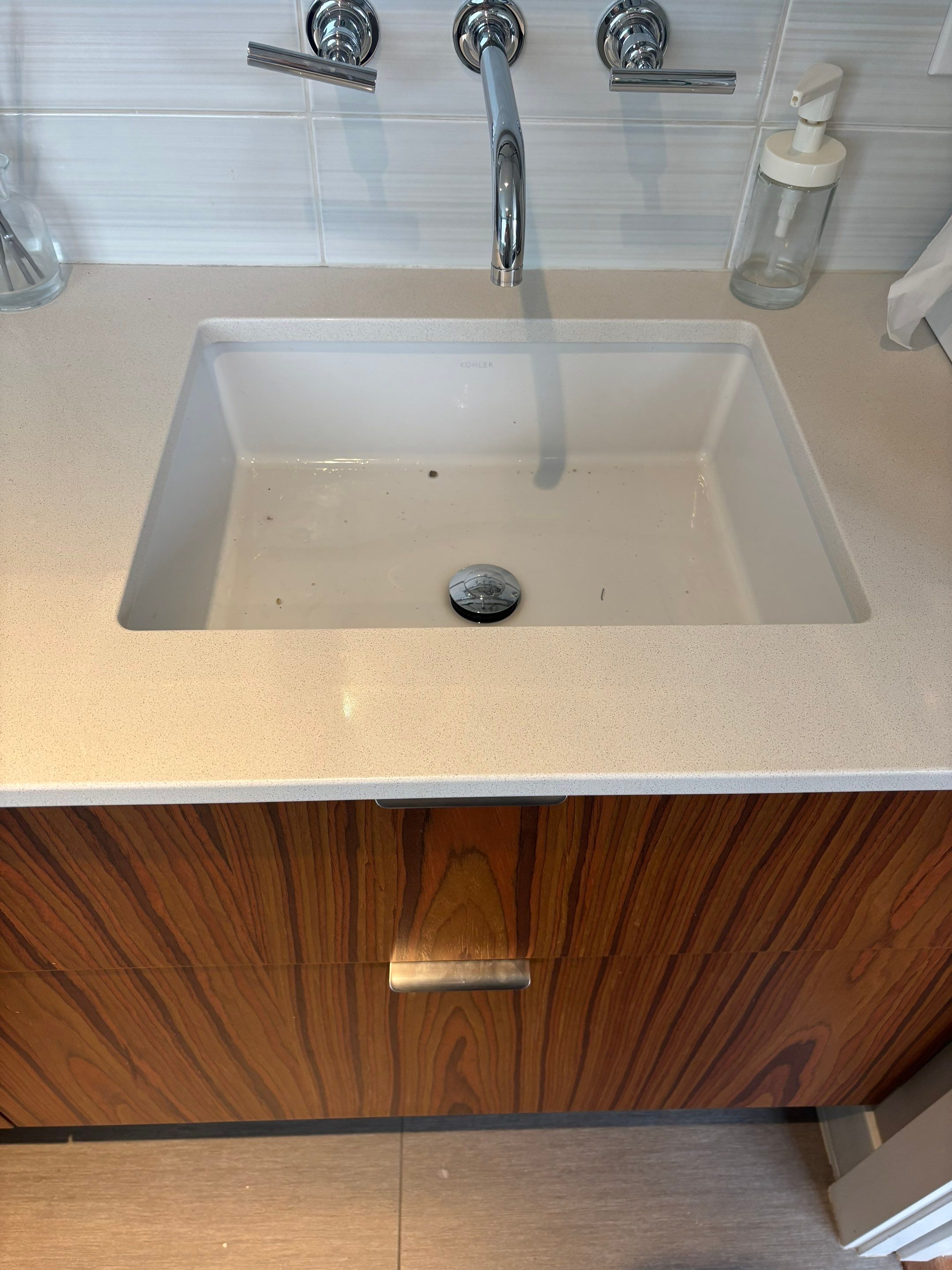
Bathroom Sink Installation
Services offered in: Tri-Cities, Vancouver Core, The North Shore, and The Fraser Valley
Your bathroom sink is used every day, but installing one involves much more than setting a basin on a vanity. The plumbing must suit the cabinet or counter, the mounting must support the sink, and the drain and water connections must align without stress.
What We Do
- We measure before anything is bought or demolished.
- We remove the old setup cleanly on swaps.
- We renew connections when their condition calls for it.
- We mount each style for the fixture and surface.

Same-Day Service
Free Quotes
Free Estimates
Crazy Fast Plumbers
About this service
Bathroom Sink Installation
Your bathroom sink is used every day, but installing one involves much more than setting a basin on a vanity. The plumbing must suit the cabinet or counter, the mounting must support the sink, and the drain and water connections must align without stress. This service covers vanity swaps, pedestal sinks, vessel bowls, undermount basins, and new sinks in bathrooms that did not have one before. If your sink is clogged, the faucet is leaking, or a pipe is dripping below the cabinet, those are different plumbing problems. We will help you identify the right service instead of recommending a replacement you do not need.

Is Bathroom Sink Installation the Right Service?
If you are planning a new sink or vanity, understanding the installation work can help you avoid booking the wrong service. Three common sink concerns belong elsewhere: a clog, a leaking faucet, or a leak from the pipes below the cabinet.
A clogged or slow-draining bathroom sink is a drain problem, not a sink problem. Hair, soap scum, and toothpaste can build up in the pop-up assembly and P-trap, and clearing them is drain cleaning work. Clogged Drain Repair is the right service for that problem. A slow sink does not need a new sink. It needs the pop-up assembly, trap, and drain checked.
A dripping, leaking, or misbehaving faucet is a faucet problem. The faucet is its own system with its own services. General malfunction, worn cartridges, weak flow, and loose handles belong to Bathroom Faucet Repair. An actively dripping or leaking tap belongs to Faucet Leak Repair. Replacing a sink because the faucet drips is like replacing a car because the wipers streak.
Water leaking from the pipes under the sink is a pipe problem. A weeping supply line, a corroded shutoff valve, or a joint that drips whether or not the sink is in use belongs to Leaking Pipes, where the source can be diagnosed before anyone recommends replacing the sink.
Bathroom Sink Installation covers a new basin going in, an old vanity coming out, a counter waiting for its bowl, and the drain, trap, and supply work that connects the fixture to the home.
What a Bathroom Sink Installation Actually Involves
A sink install looks like lifting a basin into place. The real work is the system around it, done in a specific order, and each sink style rearranges that order in its own way.
The rough plumbing sets the stage. A typical bathroom sink setup needs hot and cold supplies plus a drain stub with a trap arm at a workable height. In a like-for-like vanity swap, those connections already exist, and the job starts with condition and compatibility: do the shutoff valves work, are the supply stubs sound, and does the drain height match the new cabinet? In a new location, routing the supplies, drain, and venting becomes part of the project. Municipal requirements should be confirmed for the homeowner’s location and exact scope before work begins.
Mounting depends entirely on the style. A drop-in basin rests on the counter cutout and seals at the rim. An undermount sits below the counter and needs a support method compatible with the basin and counter material. A vessel bowl sits above the counter with a drain fitting passing through it, and its faucet height and reach must suit the bowl. A pedestal sink is anchored to the wall and may need solid backing behind the finished surface. Wall-hung sinks also depend on the wall structure and the fixture’s specified mounting system.
The drain assembly is where installs succeed or leak. The pop-up drain seals into the basin, the tailpiece drops to the P-trap, and the trap connects to the wall stub with slip joints that need natural alignment and appropriate tightening. A misaligned trap forced into position is a common source of slow under-cabinet drips.
The supplies finish the job. Supply lines connect the shutoff valves to the faucet. If the shutoffs are seized, weeping, damaged, or incompatible with the new setup, they should be addressed while the fixture connections are exposed. A new sink is only as reliable as the valves and connections serving it.
What Happens If Installation Is Done Wrong
Sink installations fail quietly, downward, and into cabinetry, which is why the mistakes cost far more than the parts involved.
The stressed trap is the classic. When the new vanity’s drain height misses the wall stub and the installer forces the trap into alignment instead of correcting it, the slip joints remain under side load. The assembly may seal at first, then begin to weep onto a cabinet floor that can swell before anyone notices. Correcting the drain geometry during installation helps prevent this avoidable damage.
The skipped shutoff replacement is the time bomb. Older valves that have not moved in years may be reused because they are not leaking today. When someone later needs to isolate the fixture, the valve may refuse to close or begin leaking. Installation is a sensible time to assess the shutoffs while the connections are already exposed.
Undermount failures are the dramatic one. An undermount sink needs a support method suited to the basin, counter material, and manufacturer requirements. Adhesive alone may not provide the required support. A basin separating beneath a stone counter can damage the fixture, cabinet, and surrounding finishes.
Missing venting is the invisible one. A new-location sink without suitable venting may gurgle, drain slowly, or lose the water seal in its trap. Drain cleaning does not correct a venting problem. In stacked or multi-unit buildings, an under-sink leak can also damage the suite below and may involve strata procedures. These details are easier to address while the installation points are open than after the bathroom is finished.
How Existing Conditions Change the Installation
Construction era and renovation history can change a vanity swap. Homes from the 1970s through the 1990s may still have drain stubs set for older cabinets or shutoff valves that have not been operated in years. Those conditions are prompts to measure and inspect, not proof that adjustments or replacement will be needed. For a first-time sink in a basement suite, ensuite addition, or relocated bathroom layout, confirm the applicable municipal requirements for the property and project scope before demolition.
Condos, townhomes, and other multi-unit buildings add different questions. A floating vanity or wall-hung basin may need backing that suits the actual wall construction. Building shutoff procedures, strata approval, and responsibility for shared systems may also need to be confirmed before work begins. In stacked buildings, a small under-sink leak can damage finished space below. Soft regional water may leave less visible mineral scale than hard-water areas, but seals and washers can still age and should be assessed when symptoms appear.
Pre-Purchase Measurements That Reduce Installation Surprises
Vanity shopping is more fun than vanity returning, so capture five details before you buy, all reachable with a tape measure and a flashlight under your current sink. One: the height of the drain stub where it exits the wall, measured from the floor to centre. Two: the positions of the hot and cold supply stubs, including their height and distance apart. Three: the width and depth of the space, including baseboards, door swings, and the planned vanity projection. Four: the counter’s faucet-hole layout if you are keeping the counter, since the basin and faucet configurations must match. Five: a clear photo of the shutoff valves and the existing trap. Send those details with the vanity you are considering so likely fit and connection issues can be identified before installation day.
Planning a new sink or vanity? Schedule Your Plumber or Call The Crazy Plumber at (236) 552-0190. We will confirm the fixture, existing connections, and project scope before the installation is scheduled.
Service details
- Tri-Cities
- Vancouver Core
- North Shore
- Fraser Valley
Spot the signs
Signs It Is Time for a New Bathroom Sink
- The vanity is failing underneath. Swollen particleboard, a delaminating cabinet floor, doors that no longer close: the cabinet has been drinking from years of small leaks, and a vanity swap replaces the sink, counter, and storage in one project.
- The basin itself is done. A cracked china basin, a chipped enamel bowl rusting at the damaged area, or a cultured-marble top with damage beyond a cosmetic fix may be more practical to replace than repair. This service covers the replacement installation.
- The bathroom is being renovated anyway. New flooring, new counter, new layout: the sink comes out regardless, and installing the new one is part of the sequence. If the whole room is changing, the Bathroom Remodel Plumbing service is the umbrella over this one.
- You want a different style. Converting a bulky vanity to a pedestal to open a small powder room, or upgrading a builder drop-in to an undermount under new stone. Wanting the change is a complete reason.
- A new bathroom needs its first sink. Basement suites and ensuite additions may require new supply, drain, and vent routing. The applicable municipal requirements should be confirmed for the property and project scope before demolition.
- The current sink was installed badly. A trap assembled under stress, a basin that rocks, or an undermount that is separating from the counter may justify removing the setup and installing it correctly.
Job steps
What The Crazy Plumber Does
- We measure before anything is bought or demolished. We compare the drain stub height with the new vanity’s shelf and back panel, check supply positions and shutoff condition, confirm counter cutout dimensions, and assess wall backing for pedestal and wall-hung styles. Measuring first helps prevent forced connections and avoidable installation changes.
- We remove the old setup cleanly on swaps. Water isolated, supplies and trap disconnected, basin and vanity out without wrecking the walls or flooring around them, and the wall stubs inspected while they are exposed. What the old vanity was hiding, including past leak damage, gets named honestly while it is reachable.
- We renew connections when their condition calls for it. We assess the shutoff valves, supply lines, and drain geometry while they are exposed. Worn or incompatible parts can be replaced, and drain-stub adjustments are made at the source instead of forcing the trap into position.
- We mount each style for the fixture and surface. Drop-in, undermount, vessel, pedestal, and wall-hung sinks each have different sealing, support, and alignment requirements. We follow the fixture and counter specifications, confirm suitable backing where needed, and avoid improvised support that can loosen or stress the basin.
- We assemble the drain without stress. Pop-up installed and adjusted so it actually holds and releases, tailpiece cut to length, P-trap aligned naturally to the wall stub, slip joints seated at correct torque. If the geometry does not line up, we fix the geometry. We do not force the trap.
- We test before we close the cabinet. We run hot and cold water, cycle the shutoffs and pop-up, fill and release the basin to test the drain, test the overflow where the basin has one, and check accessible joints underneath for moisture. The vanity should be loaded only after the plumbing has been tested.
Before you book
Questions homeowners ask
Yes. If you are supplying the vanity, send its dimensions and product information before delivery day. We can compare the cabinet layout with the drain and supply locations, assess the shutoffs and trap arrangement, and identify likely adjustments before installation. Checking the drain height against the cabinet’s shelf and back panel can prevent a common installation surprise.
Often. A deck-mounted faucet may be easier to install before the basin or counter is fixed in place, and the sink, faucet, supplies, and drain can then be tested as one system. If the faucet needs a new mounting configuration or new routing, Bathroom Faucet Installation covers that scope. The two services can be coordinated when booked together.
No. A slow or clogged sink is usually a drain problem. Clogged Drain Repair covers buildup in the pop-up assembly, trap, and nearby drain. Replacing the sink would add cost without correcting a blockage that remains in the drainage path.
Usually not, and the source decides the service. A dripping faucet that sends water down the supply lines belongs to Faucet Leak Repair. A weeping supply connection, shutoff valve, or drain joint belongs to Leaking Pipes. Installation enters the picture when the basin, vanity, mounting, or overall setup needs replacement. If you are unsure, call and describe where the water appears and when it leaks.
The service was prompt and Jordon was very knowledgeable. He explained the issue and provided us with multiple options foe our leaky faucet. Will recommend.
Karn from Crazy plumbers were quick to come help with a leak in our basement and fixed the problem right away. He was very professional and helpful, and showed me where the problem was and what to look for in the future.
Quick and easy, called the professionals to take care of the issue. Will be using them for all plumbing needs moving forward!
Ryan was very helpful and did the job quickly. He also explained some of the issues in our existing system. Thank you Ryan for your help today
Book online
I highly recommend the Crazy Plumber! Bradley promptly came to our home to address an issue we had with our hot water tank. He quickly diagnosed what the issue was and fixed it. We were quite concerned about how serious the issue was. But Bradley was clear, professional, honest, and that made for a very positive experience. Again, we highly recommend the Crazy Plumber!