
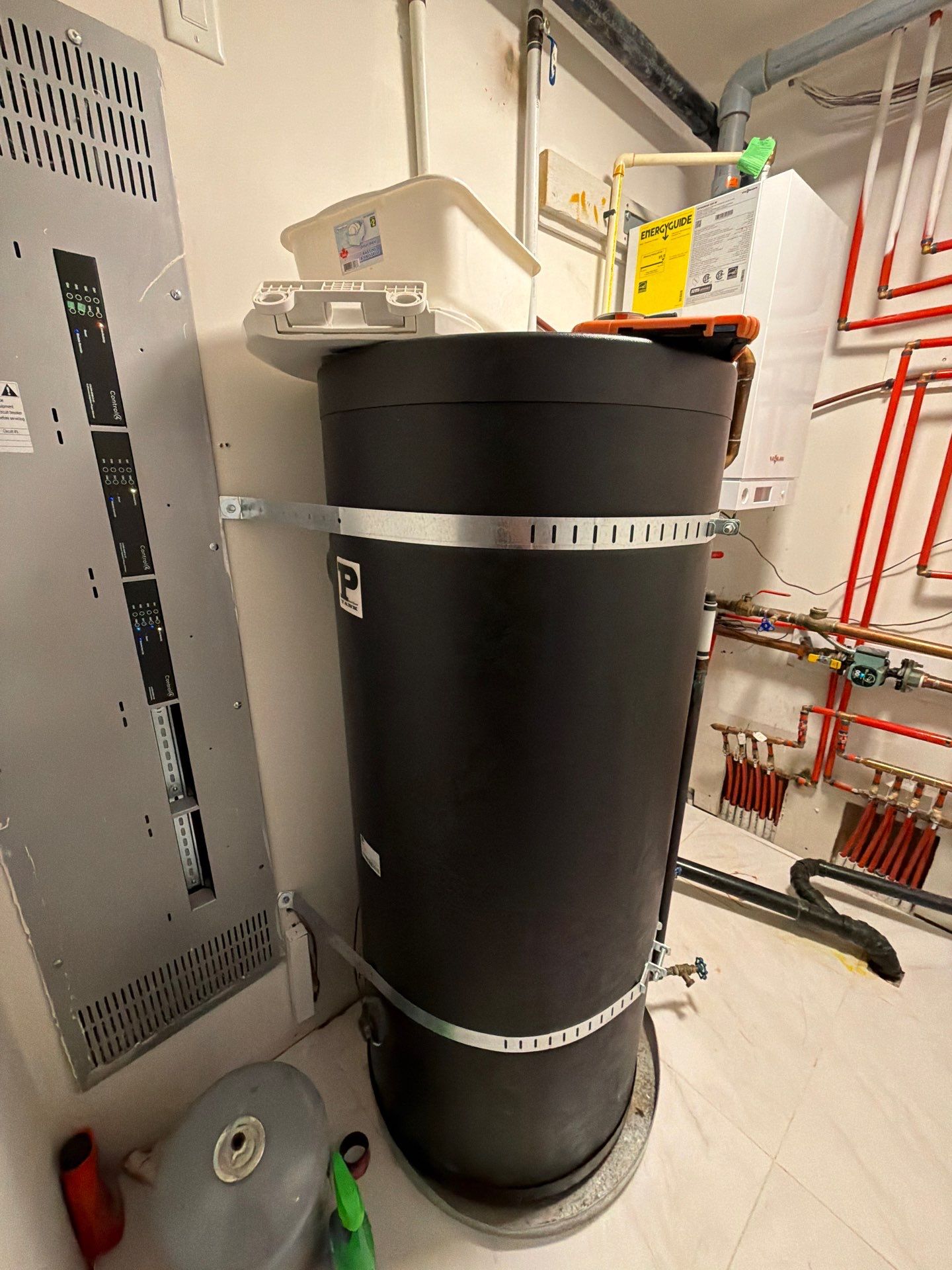
Electric Water Heater Plumber
Services offered in: Tri-Cities, Vancouver Core, The North Shore, and The Fraser Valley
An electric storage water heater can lose capacity, produce lukewarm water, stop heating, leak or trip its electrical protection. The symptom may come from a heating component, temperature control, electrical supply, water-side condition or the tank vessel itself.
What We Do
- Electrical safety status.
- The actual performance fault.
- Water-side contributors.
- Repair versus replacement.

Same-Day Service
Free Quotes
Free Estimates
Crazy Fast Plumbers
About this service
Electric Water Heater
An electric storage water heater can lose capacity, produce lukewarm water, stop heating, leak or trip its electrical protection. The symptom may come from a heating component, temperature control, electrical supply, water-side condition or the tank vessel itself. Testing the system before choosing repair or replacement prevents a failed component from being mistaken for a failed tank.

Electrical Safety Comes Before Troubleshooting
Do not remove access panels, test live components or repeatedly reset a breaker or high-limit control. If the water-heater breaker trips, leave the appliance off and arrange qualified assessment. Avoid touching wet electrical equipment, and use the normal electrical disconnect only when it is safe and familiar.
Fixed wiring, circuits, breakers and electrical-supply work are completed or coordinated with an appropriately licensed electrical contractor where required.
How Electric Water Heater Faults Are Assessed
Many electric storage tanks use heating elements and thermostatic controls to warm the stored water. The exact number, sequence, voltage, wattage, controls and diagnostic procedure depend on the appliance.
Heating components and controls. A failed element or thermostat can cause no hot water, lukewarm water or reduced usable capacity. The symptom suggests what to test, but it does not identify the exact component by itself.
Electrical supply. A tripped breaker, damaged connection, moisture near electrical components or supply problem requires electrical-safety precautions and qualified diagnosis. Repeated resetting is not a repair.
Water-side conditions. Sediment, pressure or expansion conditions, temperature settings, a hot-water leak, dip-tube problems and household demand can change performance even when the electrical components are operating.
Tank condition. Water at the base, corrosion, leakage from the vessel or deterioration around component openings can change the repair-versus-replace decision. A replaceable electrical component and a compromised tank body are different problems.
Property Conditions That Change the Electric Assessment
Useful questions include:
- What appliance model, capacity and electrical requirements are installed?
- Is the property detached, a suite, a townhouse, an apartment or another strata setting?
- Where is the heater located, and what finished space could be affected by leakage?
- Is there practical service access, a reachable shutoff and suitable drainage?
- Has the electrical panel, circuit, renovation or suite configuration changed since installation?
- Does the property have enough electrical capacity for the existing system or a proposed technology change?
- For a heat pump water heater, can the proposed location meet the selected equipment’s space, airflow, condensate and operating requirements?
- What installation, maintenance, utility or equipment records are available?
These property details are more useful than assumptions based on a city, dwelling age or local fuel pattern. An installation may qualify for current utility or provincial incentives, but eligibility must be checked against the live program, customer type, utility, equipment and installation date.
Safe Observations Before You Call
Without opening access panels, note the equipment label, visible error display, unusual sound, leak location and when performance changed. Look for water at the base or pan, corrosion, staining or scorching on the exterior. Note whether the breaker is tripped, but leave the appliance off rather than repeatedly resetting it.
Do not touch wet electrical equipment, remove covers or test electrical components. Photos of the exterior, equipment label and surrounding location can help prepare the service conversation when they can be taken safely.
Vacation Shutdowns Need Equipment-Specific Guidance
Vacation settings and shutdown procedures depend on the appliance, installation, recirculation, freezing exposure and manufacturer instructions. Do not open panels or improvise a shutdown sequence. Ask for equipment-specific guidance if you are unsure how to leave or restore the system safely.
Weak Hot Water During Peak Demand
That pattern can indicate reduced recovery, a failed heating component, a control issue, increased simultaneous demand or a hot-water loss elsewhere. Testing the appliance and comparing the household’s demand pattern can show whether repair, sizing or another plumbing issue is responsible.
Tell us the appliance model, visible symptom, whether water is leaking, whether the breaker has tripped, when performance changed and whether the home or electrical system has been renovated. Do not open panels or reset protection to collect more information.
Schedule Your Plumber or Call The Crazy Plumber at (236) 552-0190.
Service details
- Tri-Cities
- Vancouver Core
- North Shore
- Fraser Valley
Spot the signs
Signs an Electric Water Heater Needs Assessment
- Hot water runs out sooner than expected or usable capacity has changed.
- There is no hot water, or the water remains lukewarm.
- The breaker or high-limit protection trips. Leave the appliance off rather than repeatedly resetting it.
- The tank makes a new humming, hissing, sizzling or popping sound.
- There is moisture, corrosion, staining or scorching near the tank or electrical-access areas. Do not remove the panels.
- Water is leaking from the tank, fittings, relief discharge or nearby piping.
- Electricity use changes while hot water performance declines. The bill alone does not identify the cause.
- Hot water is adequate after long idle periods but weak during periods of heavier demand.
Job steps
What the Service Visit Clarifies
- Electrical safety status. Determine whether the appliance should remain off and whether the fault involves fixed wiring, the breaker or another electrical-supply component that requires an appropriately licensed electrical contractor.
- The actual performance fault. Test the appliance according to its design rather than assuming every electric tank uses the same element and thermostat sequence.
- Water-side contributors. Check whether leakage, pressure or expansion conditions, sediment, temperature settings, hot-water demand or another plumbing issue is affecting performance.
- Repair versus replacement. Consider the exact fault, vessel integrity, condition, installation, warranty, parts availability, repair cost and homeowner plans. Do not use a fixed age cutoff.
- Installation relationships. If the system needs a new location, more electrical capacity, a different technology or major supporting work, Water Heater Installation becomes the clearer design-led service.
- Maintenance direction. Base future attention on the appliance instructions, water source, installation, symptoms and service history. Flushing is considered only when appropriate for the equipment and condition.
Before you book
Questions homeowners ask
A sudden loss of usable capacity may involve a heating element, thermostat, control sequence, hot-water leak, temperature setting or increased demand. Test the appliance before assuming it is undersized or needs replacement. The tank condition and exact fault determine the next step.
Do not remove the access panel or reset the high-limit control as a general troubleshooting step. If the appliance has stopped heating or its protection has tripped, leave it off and arrange qualified assessment. Follow only the manufacturer instructions for the exact appliance.
A breaker can trip because of an appliance fault, damaged connection, moisture, wiring issue, breaker problem or another electrical condition. Leave the water heater off rather than repeatedly resetting the breaker. Arrange qualified assessment of both the appliance and the electrical supply as required.
Operating cost depends on current utility rates, equipment efficiency, hot water demand, temperature settings and system condition. Installation cost and available fuel or electrical capacity also matter. Compare current equipment and utility information rather than relying on one general gas-versus-electric rule.
Called for same day installation in a tight space and Tony showed up did a fantastic job in helping us installing the washer/dryer unit in a timely manner. Greatly appreciate it.
Had a leaky kitchen faucet! Under sink water was pooling. Called the crazy plumber and a plumber came to my home right away. Jordon did a great job with fixing my kitchen sink. I even got the garburator out and got the pipes repiped! He was very transparent with me regarding cost and worked efficiently to fix the leaky faucet issue!
Book online
Tony was great