
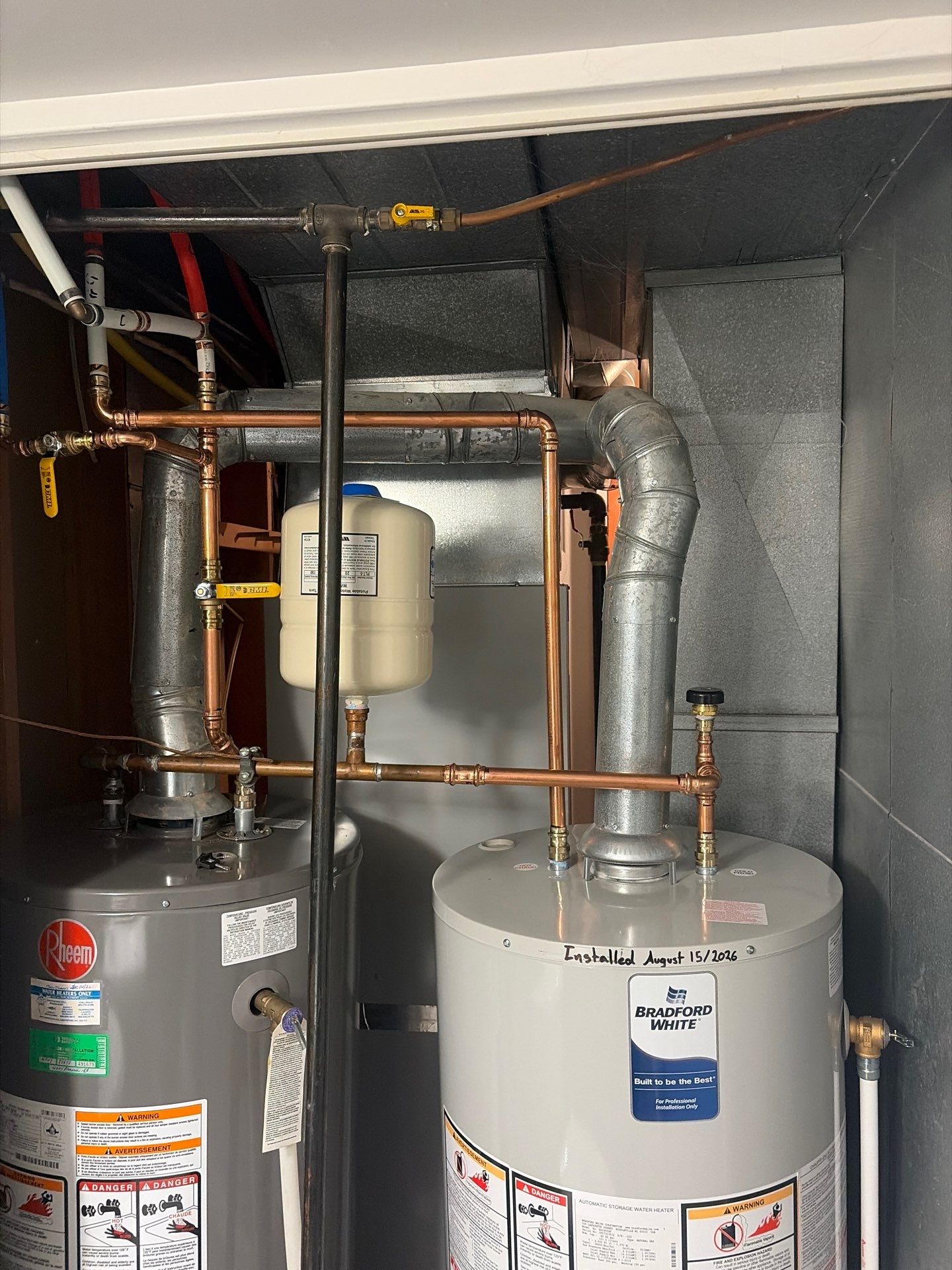
Water Heater Installation
Services offered in: Tri-Cities, Vancouver Core, The North Shore, and The Fraser Valley
Water Heater Installation is for a new system, a relocation, a fuel or technology change, a suite addition or another situation that needs design decisions before equipment is selected.
What We Do
- Clarify the intended outcome.
- Assess the property.
- Compare compatible options.
- Define the scope.

Same-Day Service
Free Quotes
Free Estimates
Crazy Fast Plumbers
About this service
Water Heater Installation
Water Heater Installation is for a new system, a relocation, a fuel or technology change, a suite addition or another situation that needs design decisions before equipment is selected. The assessment connects household hot water demand with the available space, drainage, fuel, venting, electrical supply and property conditions.
A straightforward storage-tank swap in the same location usually belongs under Water Heater Replacement. Installation is the better fit when the new system changes capacity, location, technology or supporting services.

What the Installation Assessment Covers
Household demand and sizing. Storage-tank sizing uses first-hour rating, recovery, fixture mix, typical simultaneous demand, available fuel or electrical capacity, space and future plans. Household count alone is not enough. Tankless sizing needs a separate assessment based on inlet-water temperature, the desired outlet temperature, simultaneous demand and the selected manufacturer’s performance information.
Technology and fuel fit. Storage gas, storage electric, heat pump and tankless systems have different requirements and trade-offs. The useful comparison includes available utilities, hot water demand, installation space, ventilation or venting, electrical capacity, operating preferences and the work needed to support the selected equipment.
Location and leakage consequence. The assessment considers service access, manufacturer clearances, drainage, shutoff access, nearby finished surfaces and what would happen if a leak developed. A drain pan, routed drain or other protection may be appropriate depending on the equipment, location and applicable requirements.
Gas, venting and combustion conditions. A gas installation must match the selected appliance and the actual gas supply, venting route, combustion-air conditions and termination requirements. Exact pipe, vent and clearance decisions come from the selected equipment documentation and the requirements that apply to the property.
Electrical supply. Electric storage and heat pump systems depend on the available circuit, breaker, wiring and equipment requirements. Fixed electrical work is completed or coordinated with an appropriately licensed electrical contractor where required.
Authorization and regulated work. The Crazy Plumber is a Technical Safety BC (TSBC) licensed gas contractor, TSBC licence No. LGA0213328. Regulated gas work follows the authorization process applicable to the work and jurisdiction. A relocation, venting change, fuel change or tank-to-tankless conversion may follow a different route from a qualifying like-for-like replacement.
Why the Design Decisions Matter
A water heater can be new and still be a poor fit for the property. Too little usable capacity can leave the household short of hot water. An unsuitable location can increase the consequence of leakage or make future service difficult. Gas supply, venting, combustion air, electrical capacity, pressure conditions and drainage can also change what equipment can be installed safely and practically.
The goal of the assessment is to identify those constraints before equipment is ordered and before supporting work is concealed.
Property Questions That Change the Installation
The design should be based on the property rather than a citywide assumption. Useful questions include:
- Is the home detached, a duplex, a townhouse, an apartment or another strata property?
- Is the installation serving the whole household, a suite or a separate living area?
- Where will the equipment sit, and what finished space could be affected by leakage?
- Is there practical service access, a reachable shutoff and suitable drainage?
- What fuel, venting and electrical capacity are already available?
- Has the home been renovated, expanded or converted since its original construction?
- Are there strata procedures, building shutoffs or authorization steps to confirm?
- What installation, maintenance, utility or equipment records are available?
These details help separate a workable installation from an option that only looks simple before the site is assessed.
What Changes Cost and Schedule
The main variables are the equipment type, capacity, location, access, distance from existing services, venting, gas supply, electrical work, drainage, finished surfaces, regulated authorizations and corrective work discovered during assessment. A relocation or technology change normally involves more coordination than a similar storage tank installed in the existing location.
The schedule should be confirmed after the scope, equipment and required trade coordination are known. Call (236) 552-0190 to talk it through; arrival and completion timing depend on current availability and the specific installation. Call to confirm current availability.
Service details
- Tri-Cities
- Vancouver Core
- North Shore
- Fraser Valley
Spot the signs
When Installation Is the Better Fit
Installation is usually the better service when:
- A suite, laneway home, addition or major renovation needs a new hot water system.
- The water heater is moving to a different part of the property.
- The household needs a different capacity or recovery profile rather than a similar replacement.
- The fuel or technology is changing, such as gas to electric, electric to heat pump or storage to tankless.
- The existing location creates difficult access or a high consequence if leakage occurs.
- The installation needs new venting, gas supply, electrical capacity, drainage or other supporting work.
If the goal is a similar storage tank in the same location, Water Heater Replacement is normally the clearer starting point.
Job steps
How the Installation Is Planned
- Clarify the intended outcome. Discuss the household’s hot water use, renovation plans, equipment preferences, comfort concerns and future needs.
- Assess the property. Review the proposed location, access, drainage, leakage consequence, fuel, venting, electrical supply, water connections and any available installation records.
- Compare compatible options. Explain the practical fit, limitations and supporting work for the equipment that can serve the household and property conditions.
- Define the scope. Identify the selected equipment, related plumbing work, regulated trade coordination, applicable authorization route and any assumptions that must be confirmed before installation.
- Install and commission the system. Complete the approved scope, follow the selected manufacturer’s instructions and verify operation before handoff.
- Explain the finished system. Review normal controls, accessible shutoffs, maintenance information and the documents the homeowner should keep.
A qualifying installation may be eligible for current utility or provincial incentives. Eligibility depends on the live program, customer type, utility, equipment and installation date, so it must be checked for the specific installation.
Before you book
Questions homeowners ask
Cost depends on the equipment, capacity, location, access and supporting work. Venting, gas supply, electrical capacity, drainage, finished surfaces, regulated authorizations and corrective work can all change the scope. An assessment is the reliable way to define what the estimate needs to include.
The right choice depends on hot water demand, available utilities, equipment space, venting, electrical capacity, installation cost and operating preferences. Existing gas service does not automatically make gas the best fit, and an electric option still needs an electrical and location assessment. Compare compatible systems using current equipment and utility information.
The location must suit the selected equipment and the property. The assessment considers service access, manufacturer clearances, drainage, shutoff access, venting or ventilation, electrical needs, freezing exposure and the consequence of leakage. No room type is automatically suitable for every system.
Regulated gas work follows the authorization process that applies to the work and jurisdiction. Depending on the scope, that may involve Technical Safety BC, a local authority or another approved process. The Crazy Plumber is a Technical Safety BC (TSBC) licensed gas contractor, TSBC licence No. LGA0213328.
Such wonderful service. It starts with the receptionist that answers the phone. Very polite and friendly. To the fast moving service. Luckily they had some time available for me today and were able to come by surprisingly quick. He was also very friendly, great communication. Fair pricing. He got the work done very fast and efficiently. Very happy with the overall work and service. I would definitely use him again and recommend.
One of the best, if not the best plumbers we have had to call. The lady on the phone was fabulous and friendly. Brad was amazing with communication. We will be calling again when needed :) Thank you for being amazing - The Westwood Mixer :)
Ryan was personable and friendly explained problem with kitchen faucet and had it repaired in minutes. Service was prompt and much appreciated. Thankyou Diana
Karn was very kind, fast and had the best ever service. He even provided free work and advice as it was a quick job. Highly highly recommended!!!!!
Knowing my DIY limits, I called The Crazy Plumber to take a look at what appeared to be a simple job, but made me nervous somehow. Good thing. If I’d gone ahead on my own, Tony explained, I’d have twisted the hose valve right off and caused an unholy mess, not to mention costly damage. Anyway, he installed a new frost-free hose bib and upgraded things to prevent a future disaster. The job was done quickly & efficiently. Professional stuff from start to end.
Book online
Pick a time that suits you.
Do you coordinate the electrical and gas trades for water heater installation?
The installation scope identifies which regulated trades are required. Gas work is completed under the applicable gas authorization process. Fixed wiring, circuits, breakers and electrical-supply work are completed or coordinated with an appropriately licensed electrical contractor where required.
Questions to Ask Before Approving the Installation
- How was the equipment sized, and which demand assumptions were used?
- What property conditions or supporting services limit the options?
- Which plumbing, gas, venting, electrical and drainage items are included?
- Which authorization route applies, and which authority administers it?
- What assumptions could change the scope after work begins?
- Which manufacturer documents, maintenance information and installation records should the homeowner keep?
Schedule Water Heater Installation
Tell us whether this is a new installation, relocation, suite addition, technology change or major capacity change. Include the current fuel, proposed location, home type and any equipment or renovation records you have.
Schedule Your Plumber or Call The Crazy Plumber at (236) 552-0190.
The service provided by the Crazy Plumber was fantastic. Everyone from the booking receptionist to Ryan the plumber made things quick and simple. Ryan provided the list options that might be required for resolving my plumbing issue and he quickly and efficiently got things fixed. I’m very pleased overall and I would recommend them. Thanks again Ryan.