
Dishwasher Water Line
Services offered in: Tri-Cities, Vancouver Core, The North Shore, and The Fraser Valley
Somewhere behind your dishwasher, or snaking through the cabinet beside it, is a single line no thicker than your finger, holding back the full pressure of your household water supply constantly, whether the machine runs or not.
What We Do
- We inspect the whole run, not just the visible end.
- We replace to the standard.
- We fix the valve while we’re there.
- We check what the line connects to.

Same-Day Service
Free Quotes
Free Estimates
Crazy Fast Plumbers
About this service
Dishwasher Water Line
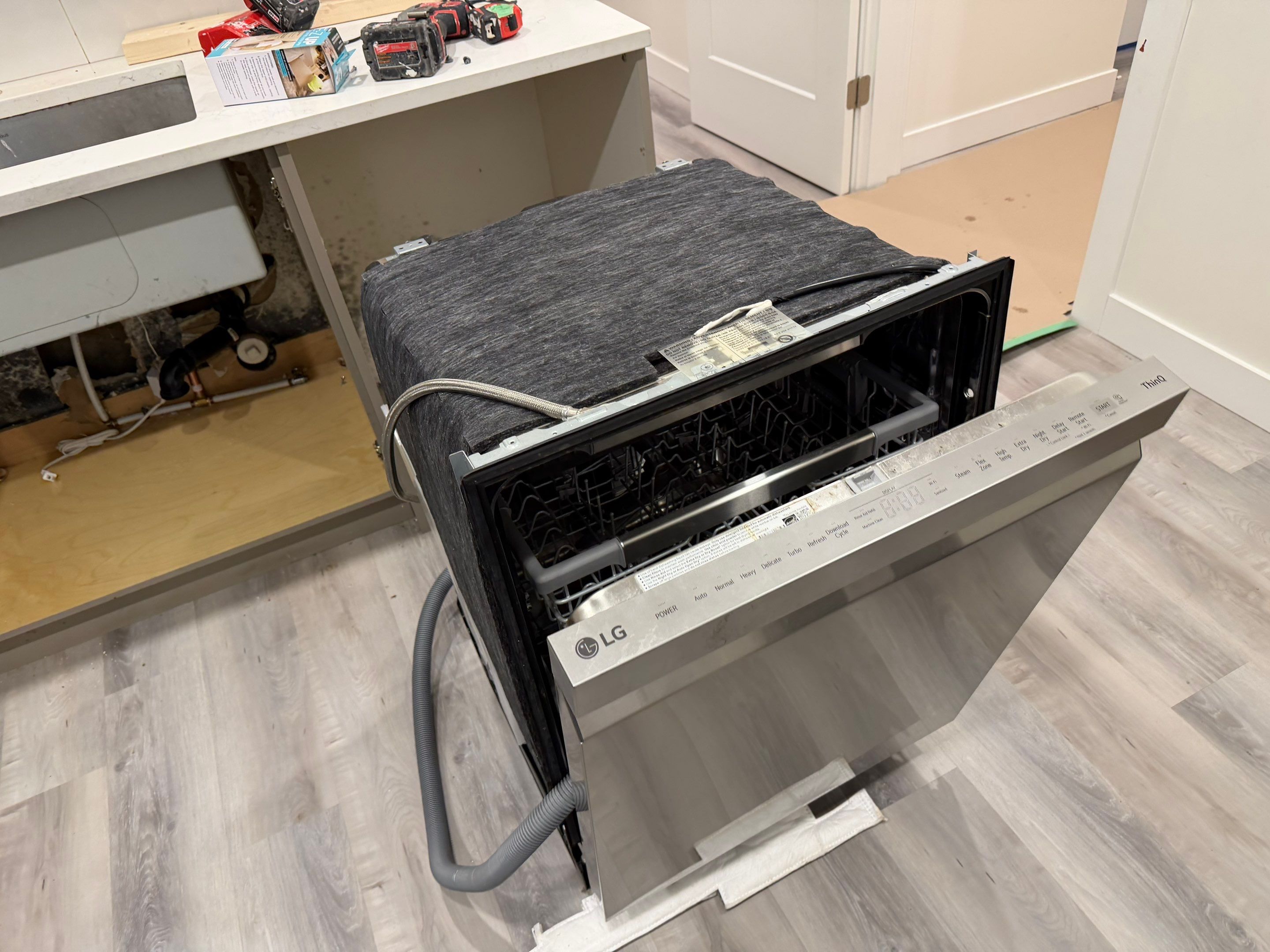
Somewhere behind your dishwasher, or snaking through the cabinet beside it, is a single line no thicker than your finger, holding back the full pressure of your household water supply constantly, whether the machine runs or not. That is the dishwasher water line, and it deserves your attention because a failed supply line can release water whether the machine is running or not. The dishwasher may get the blame, but the component that lets go can be aged plastic tubing, a worn washer, a corroded connection, or a failing shutoff that has not been checked since the kitchen was last updated.
Here is the deep dive your dishwasher’s hookup deserves: everything about the supply side of a dishwasher, on its own, because it deserves it. The line, the shutoff valve that feeds it, the fittings on each end, the materials that fail and the materials that don’t, and the ten-year replacement habit that turns an often overlooked section of plumbing in your kitchen into the least worrying. If your dishwasher works fine and you’ve never once thought about what feeds it, this page was written specifically for you, because that’s exactly the line that’s oldest.

Anatomy of a Dishwasher Water Line
The supply run is short, but every centimetre of it matters. It has four parts, and each has a right answer.
The shutoff valve. The line begins at a valve, properly a dedicated one teed off the hot supply under the adjacent sink, where a human can reach it in two seconds with the cabinet open. The right answer is a quarter-turn ball valve: ninety degrees from open to closed, no stem packing to weep, nothing to seize. Older kitchens may still have original multi-turn valves seized in the open position or saddle valves, clamp-on devices that pierce a pipe and rely on a rubber gasket to seal. Construction era is a reason to inspect, not proof of what remains, so we confirm the actual valve and line at the property. When we find a saddle valve, we recommend retiring it rather than trusting it as the dishwasher shutoff.
The line itself. The right answer is braided stainless steel: a flexible core sheathed in woven stainless, rated far beyond household pressure, resistant to kinking, and long-lived. The wrong answers are the grey or white plastic tubing of the 1980s and 1990s, which embrittles with age and hot proximity and fails without warning, and bargain-bin lines whose braid covers a core of hope. Length matters too: enough slack to slide the machine out for service, not so much that the line coils and chafes against the cabinet or the machine’s own vibration.
The dishwasher 90. At the machine end, the line meets the dishwasher’s inlet valve through an elbow fitting, the dishwasher 90, which turns the connection ninety degrees so the line runs flat under the machine instead of kinking against the floor. Skipping it, and screwing a straight connection on, is how lines end up bent at their most stressed point. It is a small fitting doing important structural work.
The washers and the torque. Every connection seals on a small washer, and washers are single-use. Reused washers, and the alternative religion of overtightening to compensate, produce the weep that soaks subfloors. Fresh washers, correct torque, done.
Water arrives at this assembly hot and at full house pressure. In hillside areas, municipal supply may run at higher pressure, but elevation alone does not diagnose a property. We measure pressure at the home before recommending a regulator or treating pressure as a cause. A sound line, correct fittings, and a working shutoff matter in every home.
What Happens If You Ignore It
A dishwasher water line has a difficult failure profile because it stays pressurized even when the machine is off. It usually sits concealed behind the appliance or deep in a cabinet, so a slow leak can run before anyone sees it. A burst line or failed connection can keep releasing water until someone reaches a working shutoff. In a detached home, that can damage cabinets, flooring, and the room below. In a condo or townhome, the same leak may affect another unit and trigger strata reporting or documentation. A braided line, sound fittings, and an accessible shutoff reduce that exposure. Dating the installation makes a ten-year replacement habit practical instead of dependent on memory.
The dishwasher line has siblings: the fridge line, the washing machine hoses, the toilet and faucet connectors, every one a small pressurized line aging quietly. Once a year, walk the house with a flashlight and a dry fingertip: touch every connection, look for crust and green, test every shutoff through one full cycle, and note anything plastic, anything kinked, and anything you can’t date. A short inspection can cover the whole home. Anything that fails the touch, the look, or the memory test goes on one list, so the weak connections can be assessed together instead of discovered one leak at a time.
Service details
- Tri-Cities
- Vancouver Core
- North Shore
- Fraser Valley
Spot the signs
Signs Your Dishwasher Water Line Needs Attention
- It’s plastic. Grey, white, or beige tubing feeding the machine is a line past its era, regardless of how dry it looks today. Its failure mode is sudden, not gradual.
- You don’t know what it is or when it was installed. In a kitchen last updated in the 1990s, an unknown line may be original and is worth checking. Construction era prompts the inspection, but the actual material and condition decide what happens next.
- Any dampness, mineral crust, or green corrosion at either end. Crust is the fossil of a slow weep. The leak is already happening; it’s just evaporating fast enough to hide.
- The shutoff won’t turn, or weeps when it does. A valve that can’t isolate the line converts every future line problem into a whole-house shutdown.
- A saddle valve anywhere in the story. Wherever it feeds, it’s on borrowed time, and it usually can’t fully stop flow even when closed.
- The line is kinked, coiled, or chafing. Geometry problems become wall-thickness problems become leaks.
- The dishwasher fills slowly or noisily. Sometimes the machine’s inlet valve, but sometimes a degraded or partially kinked line strangling the supply.
Job steps
What The Crazy Plumber Does
- We inspect the whole run, not just the visible end. Machine slid out safely, line examined end to end, both connections checked, valve exercised, and the verdict given plainly: sound, aging, or overdue.
- We replace to the standard. Braided stainless line sized with service slack, fresh washers at both ends, a dishwasher 90 at the machine, and torque that seals without crushing.
- We fix the valve while we’re there. Seized multi-turns and saddle valves come out; a quarter-turn ball valve goes in, reachable with the cabinet open, tested through its full travel.
- We check what the line connects to. The tee off the hot supply, the condition of the pipe it taps, and, in homes of the Poly B era, an honest note about what material is actually feeding this corner of the kitchen.
- We test under real conditions. Full pressure restored, a fill cycle run, both connections towel-checked dry, and the machine slid home without pinching our own work.
- We date and document it. The line gets tagged with the installation date because the ten-year replacement habit only works if someone can tell when the clock started. For strata properties, we can also document the line and valve work because some buildings or insurers may ask for appliance-supply records.
Before you book
Questions homeowners ask
Every ten years is the honest professional habit, and any time you replace the machine. Braided stainless lines rarely fail young, but their washers age, their valves deserve exercise, and a decade is where quiet risks start compounding. Plastic lines don’t get a schedule; they get replaced on discovery.
The uncomfortable truth of supply lines is that “looks fine” describes almost every line the day before it fails; the degradation that matters happens in the material and the washers, not on the surface. Age-based replacement exists because visual inspection can’t see the failure coming. It is the same logic as smoke-detector batteries, applied to a concealed, always-pressurized metre of plumbing in your kitchen.
They pierce the pipe and seal with a small gasket under a clamp, permanently, and that gasket has one direction to age. They also clog, and most can’t fully shut off when you finally need them to. “Worked for years” is exactly the résumé of every saddle valve at the moment it lets go. Retiring it is simpler than dealing with a valve that will not shut off when you need it.
Most residential dishwashers connect to the hot supply under the sink and heat the water further as needed. The manufacturer’s installation instructions decide for the specific machine, and we follow them.
Karn was super polite and very knowledgeable. Provided phenomenal service in a quick and timely matter. Would not hesitate to recommend him to anyone else. I’ll make sure to call him again for any my plumbing needs.
Tony spent a good amount of time working on a deep clog and got all of it out and now our sink is draining properly again after living with it for months! Great job!
Book online
The Crazy Plumber is a reliable and professional operation. Brad is courteous, he takes time to answer questions, he knows his trade well and he works hard when he is on the job. I highly recommend The Crazy Plumber for any and all of your plumbing needs.