
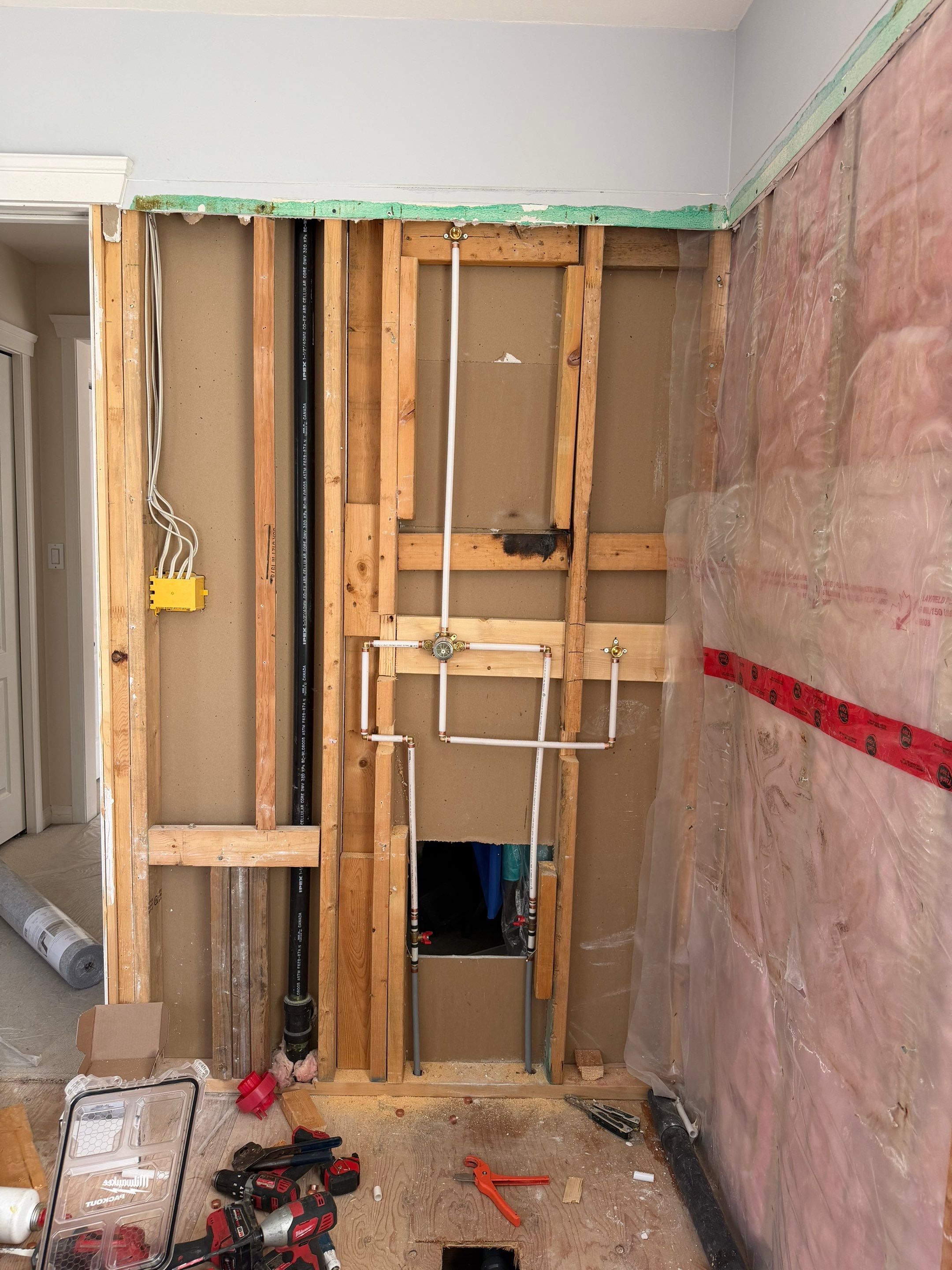
A renovation is the best chance you will have to fix hidden plumbing problems and set your home up for the next few decades. It is also where many avoidable mistakes happen. A little planning goes a long way.
1. Choose fixtures early
Faucets, shower valves, toilets and sinks have specific rough-in requirements. Wall-mounted faucets, vessel sinks and freestanding tubs each need supply and drain lines in particular places. Choose them before the rough-in so the plumbing matches.
2. Think carefully before moving fixtures
Moving a sink or dishwasher a short distance may be simple. Moving a toilet or shower can mean rerouting drains and vents, which need proper slope and connection. It is possible, but it affects scope and budget, so ask early.
3. Upgrade while the walls are open
- Replace old piping such as Poly-B or galvanized steel in the areas you are renovating.
- Install new, accessible shutoff valves for each fixture.
- Add water lines for a fridge, pot filler or future appliances.
- Check the drain line condition, especially in older homes.
4. Protect against leaks
Proper waterproofing behind showers, tested connections and leak detectors near dishwashers and fridges all reduce the risk of damage in a newly finished room.
5. Coordinate the trades
Plumbing rough-in needs to happen before drywall and after framing. Clear timing between the contractor, plumber, electrician and cabinet installer prevents costly rework.
6. Permits and inspections
Many plumbing alterations require a permit and inspection. Requirements vary by municipality. See our guide to plumbing permits in BC.
Replacement
A renovation often turns into a replacement project. Once the room is open, it makes sense to look at what sits behind the finishes, not just the finishes themselves.
- If you're replacing fixtures, check that the supply lines, shutoff valves and drain connections suit the new ones.
- If you're replacing the water heater, ask whether its location, venting and water lines still fit your plans.
- If you're replacing old piping such as Poly-B, it is usually simplest to do it while the walls and ceilings are open.
- If you're replacing shutoff valves, choose ones that are easy to reach and turn.
Tell us what you plan to replace and we will help you work out what else is worth checking.
Planning a project? Learn about bathroom remodel plumbing and kitchen remodel plumbing, or book a free estimate.